Morocco vs Canada Is a Rematch of Nothing — and Everything Achraf Hakimi Stands For
Morocco knocked out the Netherlands on penalties to reach the round of 16, where co-hosts Canada wait in Houston. For their captain, fresh off a Champions League title with PSG, 2026 is about proving 2022 was a floor, not a ceiling.
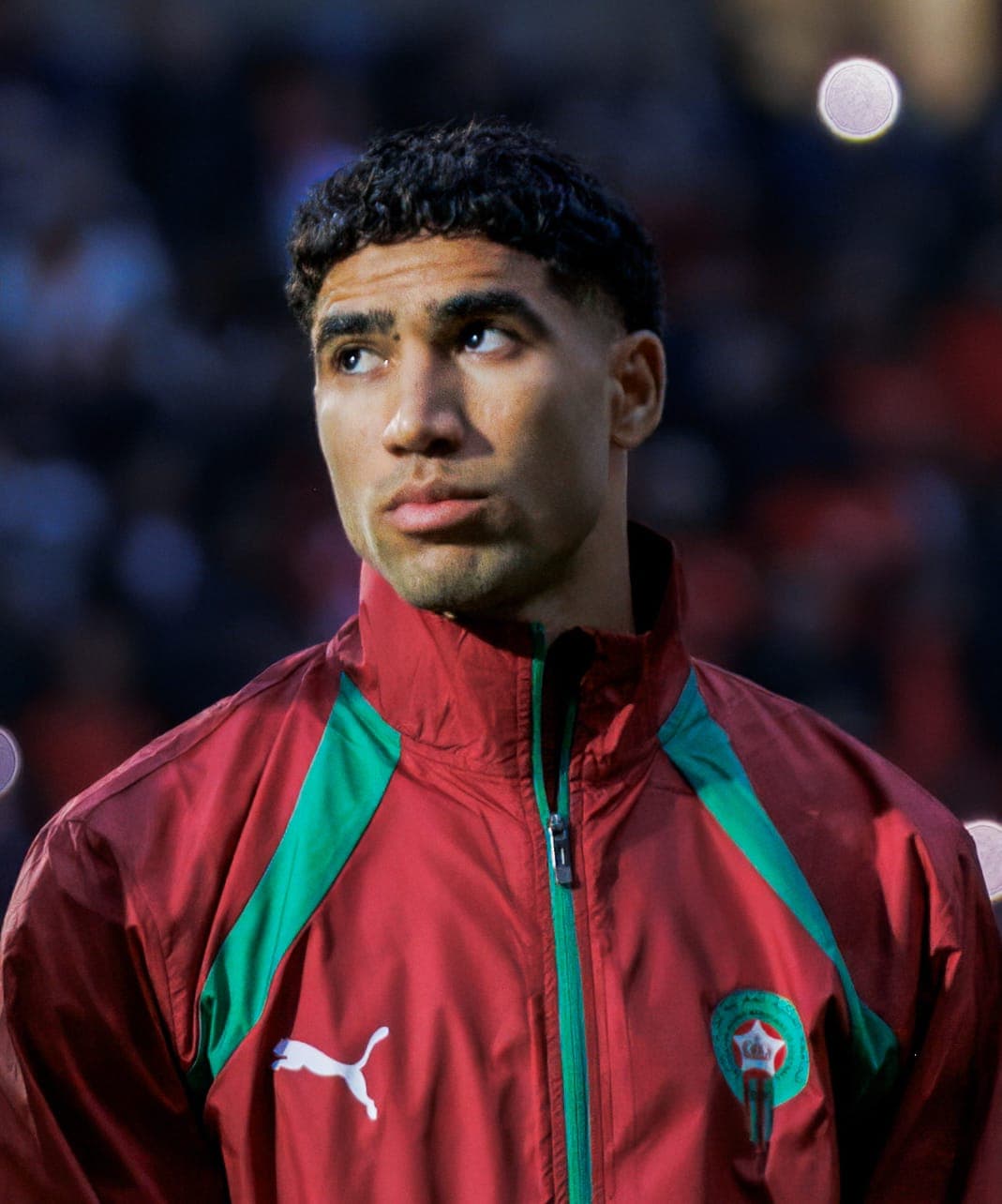
When the 2026 World Cup's round of 16 kicks off on July 4 in Houston, the first fixture on the slate is Canada against Morocco — a co-host with a nation behind it against the team that redefined what an African side can do at this tournament. At the center of it, wearing Morocco's armband, is the best right-back of his generation, playing the tournament of his prime.
How Morocco got here: the hard way, again
Morocco's route through this World Cup has already included one of its signature nights. Drawn into Group C with Brazil, they opened by holding the five-time champions 1-1 — Ismael Saibari cancelling out a Vinícius Júnior goal — then beat Scotland 1-0 through Saibari again, inside two minutes. The group closed with a 4-2 win over Haiti in which Achraf Hakimi himself got on the scoresheet, a 39th-minute strike in a game Morocco controlled from the first quarter-hour. Seven points, second place behind Brazil on goal difference, and a round-of-32 assignment nobody wanted: the Netherlands, winners of Group F.
What followed was the purest distillation of what this Moroccan generation is. The Dutch led through Cody Gakpo's 72nd-minute goal and held that lead into stoppage time — at which point Issa Diop, of all people, equalized in the 91st. Extra time settled nothing, and Morocco won the shootout 3-2, eliminating the Netherlands and booking Houston. It was the second consecutive World Cup in which Morocco has knocked a European heavyweight out on penalties; Spain, in 2022, remember the feeling.
The captain's case
Hakimi arrived at this tournament with a season behind him that settled any lingering positional debate. He was central to Paris Saint-Germain's 2025 Champions League triumph — the club's first, sealed with a 5-0 demolition of Inter in the final in which Hakimi scored the opening goal. A right-back scoring in a Champions League final, after a season of functioning as PSG's auxiliary playmaker, is the short version of why coaches talk about him as a category of one.
The longer version spans four countries. Born in Madrid to Moroccan parents, Hakimi came through Real Madrid's academy, then built his reputation on loan at Borussia Dortmund, at Inter Milan — where he won the 2021 Scudetto — and at PSG from 2021. He chose Morocco over Spain as a teenager, a decision that has since become the emblem of a broader story: the Moroccan federation's long investment in its diaspora, which built the squad that reached the 2022 semi-final.
In Walid Regragui's system, Hakimi's role is closer to a wide midfielder with defensive duties than a traditional full-back. Against Brazil, he spent long stretches as the outlet against the press; against the Dutch, he played both the shutdown assignment on his flank and the launch point for counters. Anyone who watched him chip his shootout penalty past Unai Simón in 2022 knows how comfortable he is when a tournament comes down to twelve yards.
2022 casts a long shadow, usefully
Morocco's semi-final run in Qatar was the greatest achievement in African World Cup history, and it changed the frame for everything since. This squad no longer plays with the house's money; it is expected — at home, across Africa, and in the draw projections — to reach the deep rounds. Hakimi is the emblem of the 2022 core, and around it a younger wave — Ismael Saibari's three group-stage goals lead the team — has added the scoring punch that the 2022 side, for all its resilience, lacked.
That evolution matters for the Canada tie, because Morocco will likely see more of the ball than they did against the Dutch. Canada topped the tournament's opening match window with a workmanlike group campaign — a 1-1 draw with Bosnia, a 6-0 demolition of Qatar in which Jonathan David scored a hat-trick, and a 2-1 defeat to Switzerland — then ground past South Africa 1-0 in the round of 32, Stephen Eustáquio scoring in second-half stoppage time. Jesse Marsch's side runs hard, presses in waves and feeds on its home crowds; but against a set defense it has looked mortal, and Morocco's is the best set defense left in this half of the bracket.
The matchup, in one paragraph
Canada's danger is transition chaos and the David-Larin axis; Morocco's is control, set pieces and the best full-back on the continent overlapping at will. The historical footnote — Morocco beat Canada 2-1 when they met in the 2022 group stage — means little, but the structural matchup means plenty: Canada have not faced a defense this organized all summer, and Morocco have not faced a crowd this loud. Hakimi against Canada's left side, where Marsch's aggressive full-back positioning leaves grass to run into, may be the single most consequential individual matchup of the round's opening day.
What this tournament is for
Hakimi is 27. The 2022 semi-final made him a national icon; the 2025 Champions League made him, by acclamation, the world's best at his position. What 2026 offers is the chance to convert Morocco's breakthrough into permanence — to make African semi-finalists a recurring category rather than a miracle. A quarter-final would match 2022. Anything more would be new ground, and this version of Morocco, with its captain at the absolute peak of his powers, is built for new ground. Houston, on the Fourth of July weekend, is where we find out. Sources: FIFA's official match records; BBC Sport and ESPN tournament coverage.