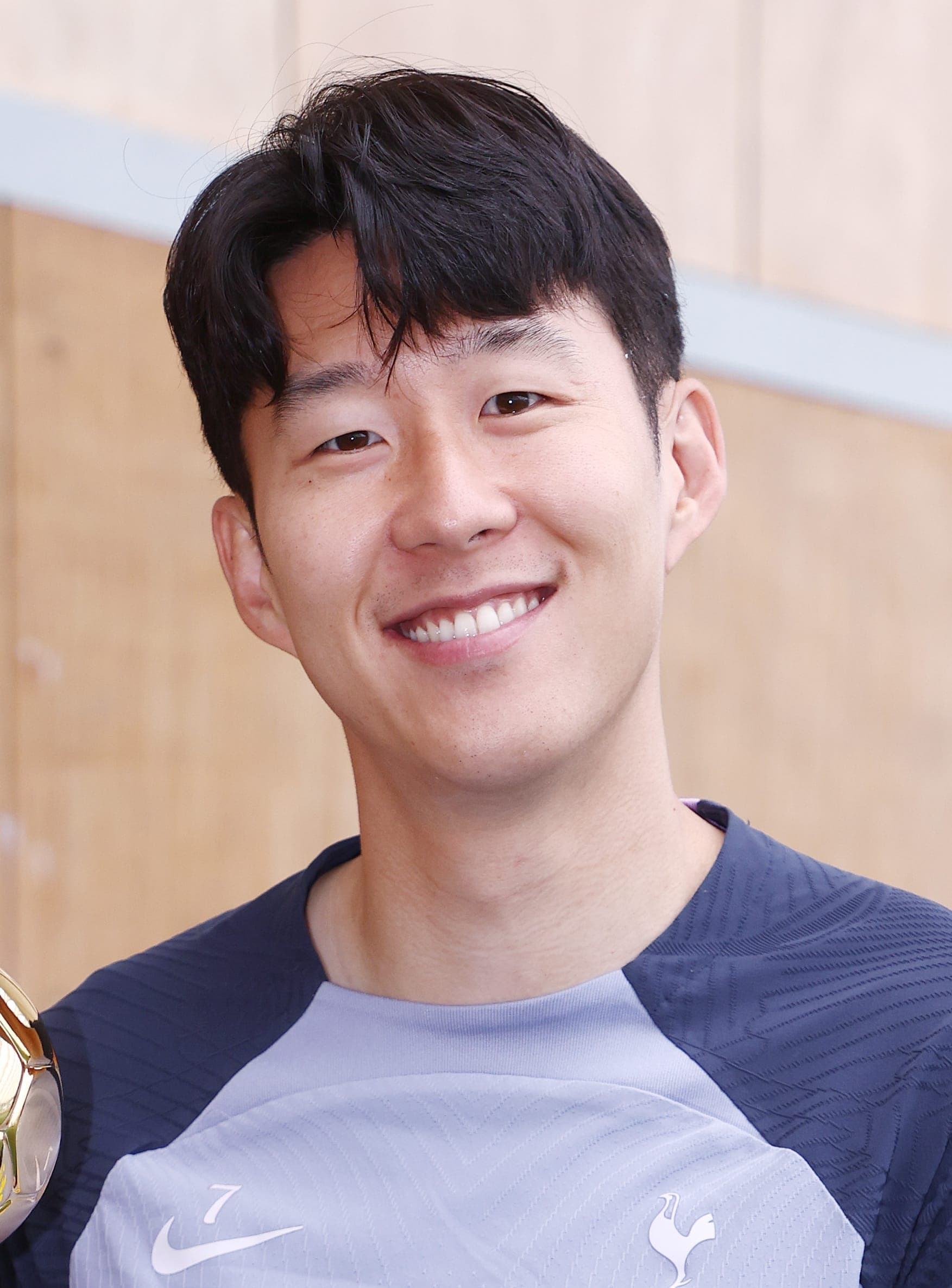
Son Heung-min's Last World Cup Group Told the Story of His Whole Career
South Korea went out in the group stage of the 2026 World Cup after one bright night and two narrow defeats. For their 33-year-old captain, it was a painfully fitting end to a fourth World Cup.
South Korea's 2026 World Cup lasted three matches: a comeback win over Czechia, a 1-0 defeat to hosts Mexico, and a 1-0 defeat to South Africa that sent them home at the group stage. Somewhere in the arithmetic of Group A — three points, third place, not enough for one of the best-third berths — a great international career reached its final World Cup act. Son Heung-min is 33, turning 34 this month. There will not be a fifth.
Hamburg, and the making of a technician
The career that ended its World Cup chapter in North America began in Germany. Son left Chuncheon for Hamburger SV's academy as a teenager, part of a development path his father — a former player who ran a football academy — mapped with famous rigor: thousands of repetitions, both feet, before tactics were ever discussed. The result was the cleanest striking technique of his generation of Asian players. He debuted in the Bundesliga at 18, moved to Bayer Leverkusen in 2013 for a club-record fee, and by 2015 had earned the transfer that defined him: Tottenham Hotspur, for a fee that made him the most expensive Asian player in history.
At Spurs he became a global star — a decade of Premier League football, more than a hundred league goals, the 2019 Champions League final, and in 2021-22 the Premier League Golden Boot, shared with Mohamed Salah and won without a single penalty. The 2020 Puskás Award, for a solo goal that started in his own half against Burnley, captured what made him distinct: elite speed married to that Hamburg-built technique. In 2023 he was named Tottenham captain, the first Asian player to captain a Premier League club on a permanent basis.
The move to Los Angeles FC in the summer of 2025 — a record MLS transfer — brought the elite-European chapter to a close on his own terms, and put him, conveniently, on this World Cup's doorstep: an adopted home tournament, in the country where his club career now lives.
Four World Cups, one recurring script
Son's World Cup history is cruelly consistent. In 2014, a young Son scored against Algeria in a group-stage exit. In 2018, he scored twice — including in the famous win over Germany that eliminated the defending champions — but Korea still went out on the group's final day. In 2022, playing days after facial surgery in a protective mask, he assisted the stoppage-time goal against Portugal that carried Korea into the round of 16, where Brazil ended it. The pattern: individual brilliance, collective ceiling.
2026 followed the script with one difference — this time the brilliance belonged mostly to others. Korea's opener against Czechia in Group A was the campaign's high point: trailing to a Krejčí goal, they turned it around late through Hwang In-beom and Oh Hyeon-gyu for a 2-1 win that briefly made the knockouts look likely. Then came the hosts Mexico, a 1-0 defeat decided by a Romo goal early in the second half, and finally the killer: 1-0 to South Africa, Maseko scoring just after the hour, on a night Korea needed only a draw to keep their fate alive in the best-thirds race.
Son, as captain, carried the burden of all three nights, but the goals would not come — his World Cup tally stayed frozen at three. Hong Myung-bo's side created little for him, and the expanded 48-team format — which sends eight third-placed teams through — made the exit sting more: this was, statistically, the most forgiving World Cup group stage ever staged, and Korea still fell short.
What he leaves behind
It is difficult to overstate what Son has meant to Asian football. He is among South Korea's most-capped players and all-time leading scorers, the face of two decades of national teams, and the proof-of-concept for every Asian prospect sold to Europe since: that the pathway from an Asian academy to captaining a Premier League club exists. The bronze statue unveiled outside Tottenham's stadium during his final Spurs years said as much about his standing in London; his reception in Seoul after every tournament says more about his standing at home.
The international career may continue past this World Cup — the 2027 Asian Cup, on current form, remains plausible, and Son has previously resisted retirement talk. But the World Cup ledger is closed: four tournaments, three goals, one round of 16, and the permanent what-if of a golden generation — Son, Kim Min-jae, Lee Kang-in, Hwang Hee-chan — that never quite clicked in June.
The ending as epitaph
There is a temptation to call Son's World Cup career a disappointment, and it should be resisted. He arrived at each tournament as the entire attacking plan of a nation of fifty million, was defended accordingly, and still produced moments — the Germany win, the Portugal assist through a broken face — that his country will replay for decades. The 2026 group stage, with its one comeback and two one-goal defeats, was the career in miniature: excellence, margins, and an exit before the story felt finished. Few players have given more to a shirt and received less back from the sport's biggest stage. Sources: FIFA's official match records; career background via Tottenham Hotspur, the Premier League and BBC Sport.