One Kick From a Quarter-Final Path: How Virgil van Dijk's Netherlands Went Out of the 2026 World Cup
The Dutch won their group scoring ten goals, led Morocco into stoppage time — and went home on penalties. For their 34-year-old captain, the loss in Monterrey may be the end of a World Cup story that never got its final act.
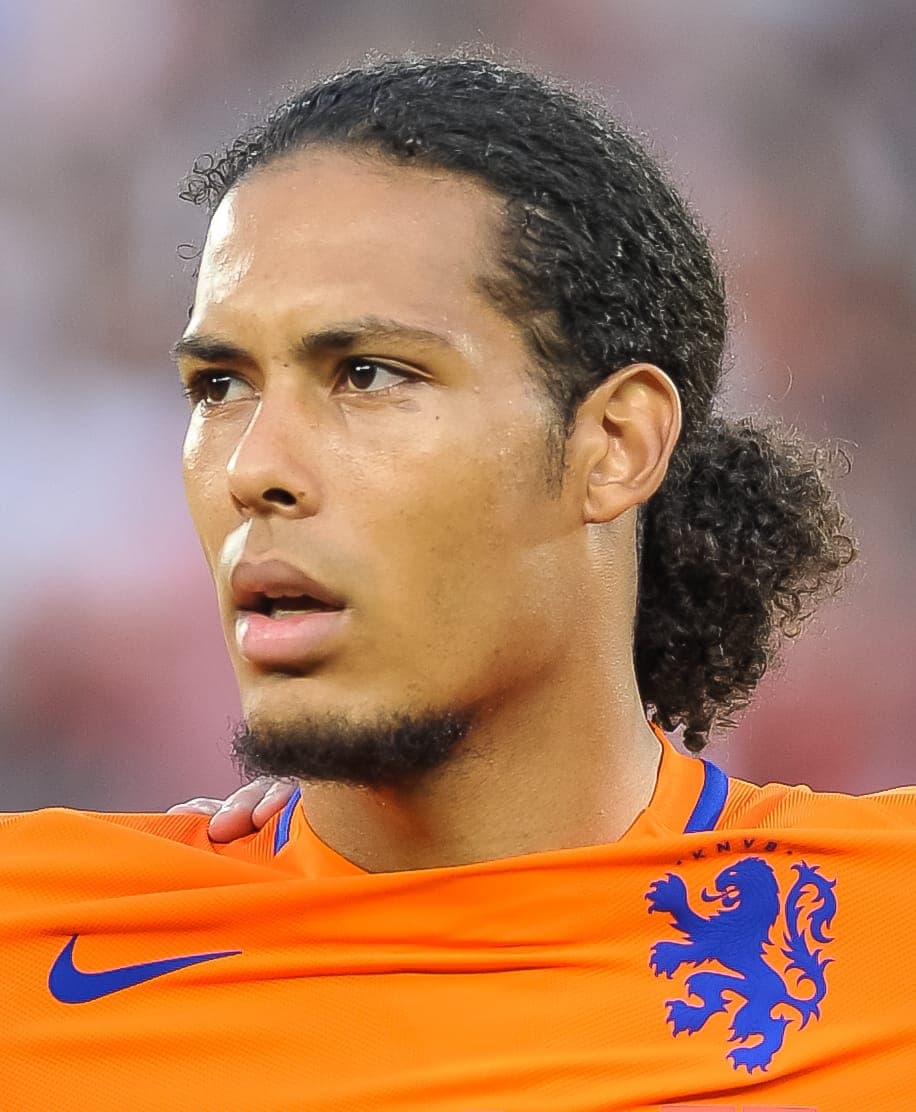
For 91 minutes in Monterrey, Virgil van Dijk was organizing a defense that stood one clean clearance from the round of 16. Then Issa Diop scored, extra time came and went, Morocco's penalty takers did not miss, and the Netherlands — group winners, scorers of ten goals in three group games, one of the most complete teams of this World Cup's opening fortnight — were out, 3-2 in the shootout, in the round of 32. The expanded format's cruelest property is that it created a knockout round early enough to ambush a good team before its tournament begins. The Dutch are its most prominent victim.
A group stage that promised much more
The Netherlands' Group F campaign was the argument for them as dark horses. The opener against Japan was flawed but revealing — 2-2, with Van Dijk himself heading the opening goal in the 51st minute and Crysencio Summerville adding a second, either side of Japanese goals that found the gaps behind the Dutch midfield. What followed suggested a team correcting in real time: Sweden were dismantled 5-1, Brian Brobbey and Cody Gakpo scoring twice each, and Tunisia beaten 3-1 in a closer that Ronald Koeman's side controlled from the third minute. Ten goals, first place, and a bracket that looked navigable.
Van Dijk's own form tracked the team's. The goal against Japan made him one of the tournament's rare scoring center-backs; the organizational work — the constant, visible conducting of a back line missing its ideal partners for stretches — was the more familiar contribution. At 34, he no longer wins footraces he once made irrelevant, and the Japan game exposed as much; what he retains is the positional command that made him, in his prime, the best defender of his generation.
Monterrey
The Morocco tie at Estadio BBVA was the group stage's lesson repeated as tragedy. The Dutch took the lead through Gakpo in the 72nd minute and, needing only to manage eighteen minutes plus stoppage, retreated into exactly the passive block Koeman's teams have been criticized for since his first spell. Morocco — 2022 semi-finalists, penalty assassins of Spain in that tournament — pushed their full-backs high, loaded the box, and found the equalizer in the 91st minute through Diop, a center-back sent forward as a last resort. Extra time produced caution from both sides; the shootout produced what Morocco's shootouts produce. 3-2. Handshakes. Silence in the Dutch end.
It was the second consecutive World Cup in which the Netherlands exited on penalties — Argentina beat them the same way in the 2022 quarter-final, after Wout Weghorst's late double had forced extra time. Dutch football's relationship with the penalty spot, a national wound since the 1990s, has a fresh chapter.
The captain's ledger
Van Dijk's World Cup career now reads: one tournament missed entirely (2018, when the Dutch failed to qualify), one quarter-final on penalties (2022), one round of 32 on penalties (2026). For a player of his standing — a Champions League winner, two-time Premier League champion with Liverpool including the 2024-25 title won as club captain, the defender who finished second in the 2019 Ballon d'Or — it is a startlingly thin international file. The Nations League final defeat of 2019 remains the closest he has come to a trophy in orange.
That gap is not his doing, and Dutch assessments of him will not pretend otherwise. Since his 2015 debut he has been the constant in a national team that cycled through managers, rebuilds and philosophies; the captaincy, held since 2018, made him the public face of every one of them. The Koeman-era Netherlands were built explicitly around his distribution and his ability to defend enormous spaces alone — properties that, even at 34, made this Dutch side structurally sounder than most of its rivals. Ten goals scored and a stoppage-time concession are the epitaph: the structure worked until the one minute it didn't.
What ends here, and what doesn't
Whether Monterrey was Van Dijk's final World Cup match is a question he will be asked all summer, and precedent suggests he will answer it slowly. He will be 39 when the 2030 tournament arrives — implausible, even for a player whose game was never built on speed. The Euro of 2028, at 37, is the realistic last act, and Liverpool's medical staff can attest that his physical standards remain freakish; he captained the club through its 2024-25 Premier League title season as a virtual ever-present.
The likelier ending is a gradual one: the armband passed to the Frenkie de Jong generation's successors, the center of the Dutch defense rebuilt around younger legs, Van Dijk himself deciding how much of the rebuild he owes his body. Dutch football has been here before — the great generations of 1974 and 1998 also left without the trophy their talent argued for, and the national mythology has long since made peace with beautiful insufficiency.
The unsentimental summary
The Netherlands were good enough to reach at least the quarter-finals of this World Cup, and they went out in its first knockout round without losing a match in regulation — beaten by fine margins, a braver opponent in the decisive minutes, and the lottery Dutch teams keep losing. Their captain scored a goal, organized a group-winning campaign, and walked off in Monterrey with nothing. Football owes Virgil van Dijk no apology; it simply never gave him the international June his career deserved. Sources: FIFA's official match records; career background via Liverpool FC and the Premier League.