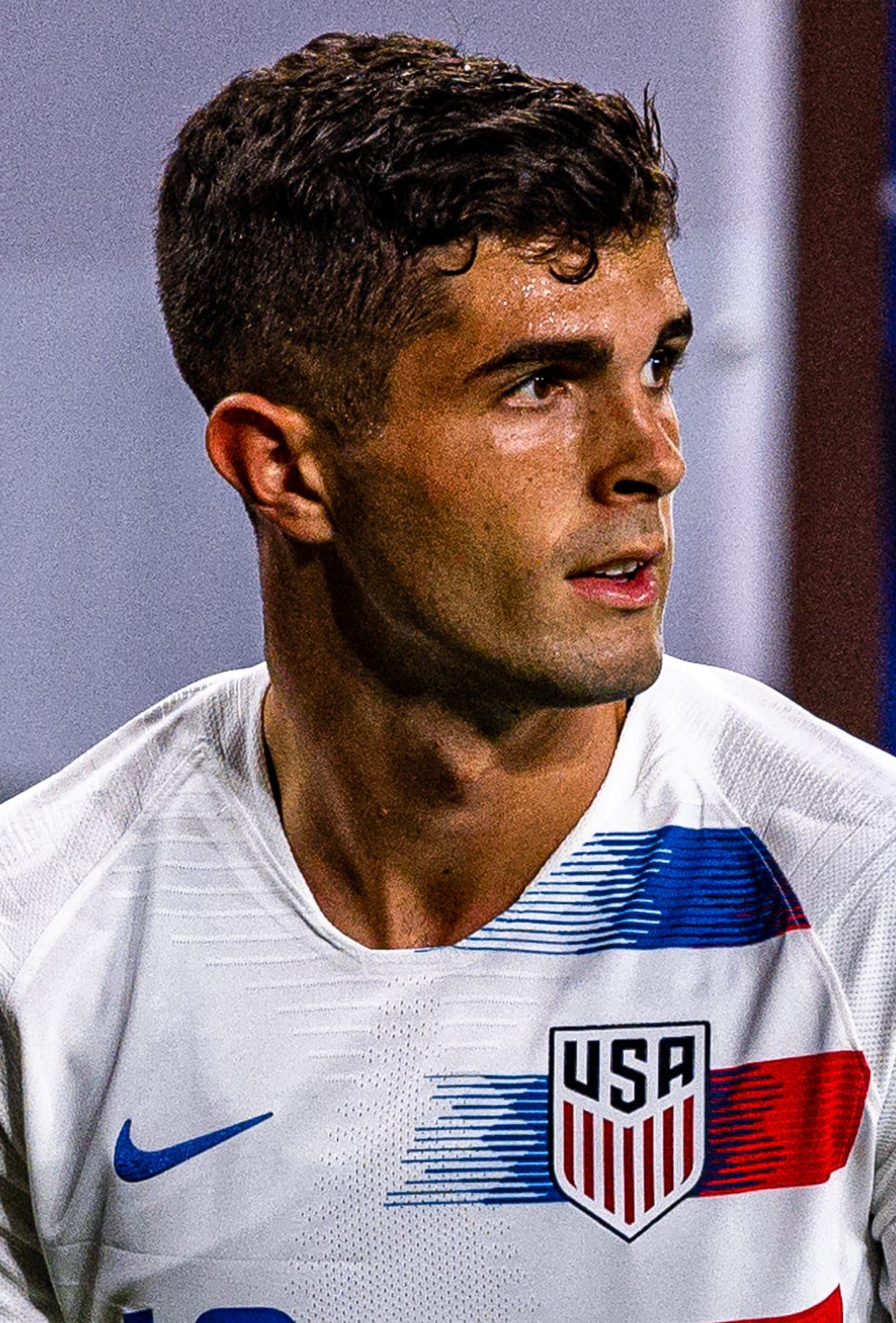
Christian Pulisic's Interrupted World Cup: Injury, Return, and a Round of 16 Date with Belgium
The USMNT have reached the last 16 of their home World Cup, but their talisman has spent much of it fighting a calf problem. A look at Pulisic's stop-start tournament — and why the Belgium game still runs through him.
The United States are into the round of 16 of their home World Cup, and they have gotten there the hard way — with their most important player watching more of it than anyone planned. Christian Pulisic's tournament has been defined by a calf injury that disrupted his group stage and turned every American team sheet into a national news event. When he was named in the starting lineup for the round-of-32 meeting with Bosnia and Herzegovina, ESPN treated the fitness update as the story of the day. That is what Pulisic means to this team.
A group stage won without its main character
Strip out the drama around one player and the group campaign was, by American standards, excellent. The U.S. opened Group D by dismantling Paraguay 4-1 in front of a home crowd, with Folarin Balogun striking twice either side of an early own goal and Gio Reyna adding a fourth deep into stoppage time. A controlled 2-0 win over Australia followed. Even the wobble — a 3-2 defeat to Türkiye in the final group game, sealed by Kaan Ayhan in the ninth minute of added time — cost nothing but pride, since the group was already won.
Pulisic's part in all of that was frustratingly small. The calf problem limited him to cameo minutes across the group stage, and by the knockout opener against Bosnia and Herzegovina he had made just three appearances and two starts in the tournament, per ESPN's lineup reporting. Tellingly, U.S. Soccer's own team notes listed Tim Ream as captain for that match — the armband question resolved by fitness rather than form.
The Bosnia game itself was more grind than glide: Balogun broke the resistance right on the stroke of half-time and Malik Tillman added a second in the 82nd minute of a 2-0 win in the Bay Area. It was the fourth match of the American campaign, and the first with Pulisic starting.
Why he still changes everything
It is worth being precise about what Pulisic gives this team, because the group stage demonstrated both halves of the argument. Without him at full throttle, the U.S. still scored freely against Paraguay and Australia — Balogun's confidence in front of goal has been one of the tournament's quiet American subplots. What went missing was the player who can take a knockout game away from a set defense on his own: the low, whipped deliveries from the left half-space, the willingness to attack the box late, the sense that one touch can turn a stalemate.
His career has been built on exactly those moments. Pulisic came through Borussia Dortmund's academy and was a Bundesliga regular as a teenager, moved to Chelsea in 2019 for what was then a record fee for an American, and won the Champions League there in 2021 — the first American man to play in the final. At AC Milan since 2023, he has been the most consistently productive American attacker in Europe. For the national team, his signature moment remains the goal against Iran in Qatar in 2022 that sent the U.S. into the knockout rounds — scored, characteristically, at physical cost, as he collided with the goalkeeper and was substituted at half-time.
That 2022 tournament is the useful comparison for this one. The U.S. reached the round of 16 in Qatar and were beaten 3-1 by the Netherlands, a game that exposed the gap between a promising young side and a seasoned European opponent. Four years on, roughly half this squad returned as World Cup veterans, Mauricio Pochettino has had a full cycle to shape the team, and the tournament is at home. The bar, accordingly, has moved: matching 2022 was the minimum, and beating it requires winning the kind of game that comes next.
Belgium in Seattle
The round of 16 sends the Americans to Lumen Field on July 6 to face Belgium — a fixture with real history for this program. Belgium ended the U.S. run in the round of 16 in 2014, a 2-1 extra-time defeat remembered for Tim Howard's sixteen saves. The 2026 version of Belgium arrived here in less than convincing style: they needed a Romelu Lukaku equalizer in the 86th minute and two Youri Tielemans goals, the second a penalty in the final seconds of extra time, to get past Senegal 3-2 in the round of 32. Before that they had won Group G without ever quite pulling away, edging it on goal difference from Egypt after a 1-1 draw with the Egyptians, a goalless stalemate with Iran and a 5-1 win over New Zealand in which Kevin De Bruyne and Lukaku both scored.
Belgium's aging spine can still decide a match, but a team that concedes twice to Senegal and needs 120 minutes to advance is a team that can be run at. That is precisely the calculation that makes Pulisic's calf the most-watched muscle in American sports this week. A fully fit Pulisic attacking Belgium's right side changes the geometry of the game; a half-fit one forces Pochettino into the kind of risk management no coach enjoys in a knockout round.
The stakes
Pulisic is 27. He has spent a decade as the face of American soccer, from teenage prodigy in Dortmund to "Captain America" in Qatar, and this home World Cup was always going to be the defining chapter of that story. So far the tournament has withheld the storybook version — no goals to his name through four matches, more headlines about his fitness than his football. But the bracket in front of the co-hosts is open, the team is scoring without him, and the stage on July 6 is exactly the kind he has spent his career rising to. One good night in Seattle and the interrupted World Cup becomes the redemption World Cup. Sources: ESPN, U.S. Soccer, and FIFA's official match records.