Kevin De Bruyne's Last Dance Reaches Seattle — and a USA Tie With History in It
At 35, in what is surely his final World Cup, De Bruyne has steered an imperfect Belgium into the round of 16. Standing between him and a quarter-final: the co-hosts, and an echo of 2014.
Twelve years ago in Salvador, a 23-year-old Kevin De Bruyne scored in extra time to knock the United States out of the 2014 World Cup. On July 6 in Seattle, at 35, he gets the fixture again — same round, same opponent, opposite side of the Atlantic, and this time with the hosts' crowd against him and the label "golden generation" long since converted from promise to elegy. Belgium against the USA is the round of 16's best history lesson. It may also be Kevin De Bruyne's last World Cup match.
The tournament so far: vintage in flashes, mortal in stretches
Belgium's route to Seattle has been anything but regal. They opened Group G with a 1-1 draw against Egypt, rescued by an own goal after Mostafa Ashour had given the Egyptians a first-half lead. A goalless draw with Iran followed — a match of sterile control that had Belgian pundits reaching for familiar criticisms. Qualification was settled only in the finale, a 5-1 dismantling of New Zealand in which the old machinery briefly gleamed: Leandro Trossard twice, Romelu Lukaku, Alexis Saelemaekers, and in the 66th minute De Bruyne himself, curling home the kind of goal that has decorated a decade of Premier League football. Belgium won the group on goal difference from Egypt, five points apiece.
The round of 32 delivered the campaign's defining night: Belgium 3, Senegal 2, after extra time — a match Belgium were losing 2-0 with five minutes of normal time left. Habib Diarra and Ismaïla Sarr had scored either side of half-time before Lukaku pulled one back in the 86th and Youri Tielemans — an 89th-minute equalizer, then a penalty in the 125th minute — completed one of the great World Cup escapes. De Bruyne played deep into extra time, dictating the endgame at walking pace, which is roughly how he has played this entire tournament: fewer sprints, more geometry.
Napoli, and the graceful step sideways
The context for that changed gait is the move that surprised Europe in the summer of 2025: De Bruyne left Manchester City, after a decade and six Premier League titles, for Napoli on a free transfer. It was a departure managed with unusual candor — City's era-defining playmaker acknowledging that his hamstrings and the Premier League's tempo had reached a disagreement, and choosing Serie A's slower geometry instead. In Naples he found what the move promised: a league that rewards the pass rather than the press, and a public that treats playmakers as civic monuments.
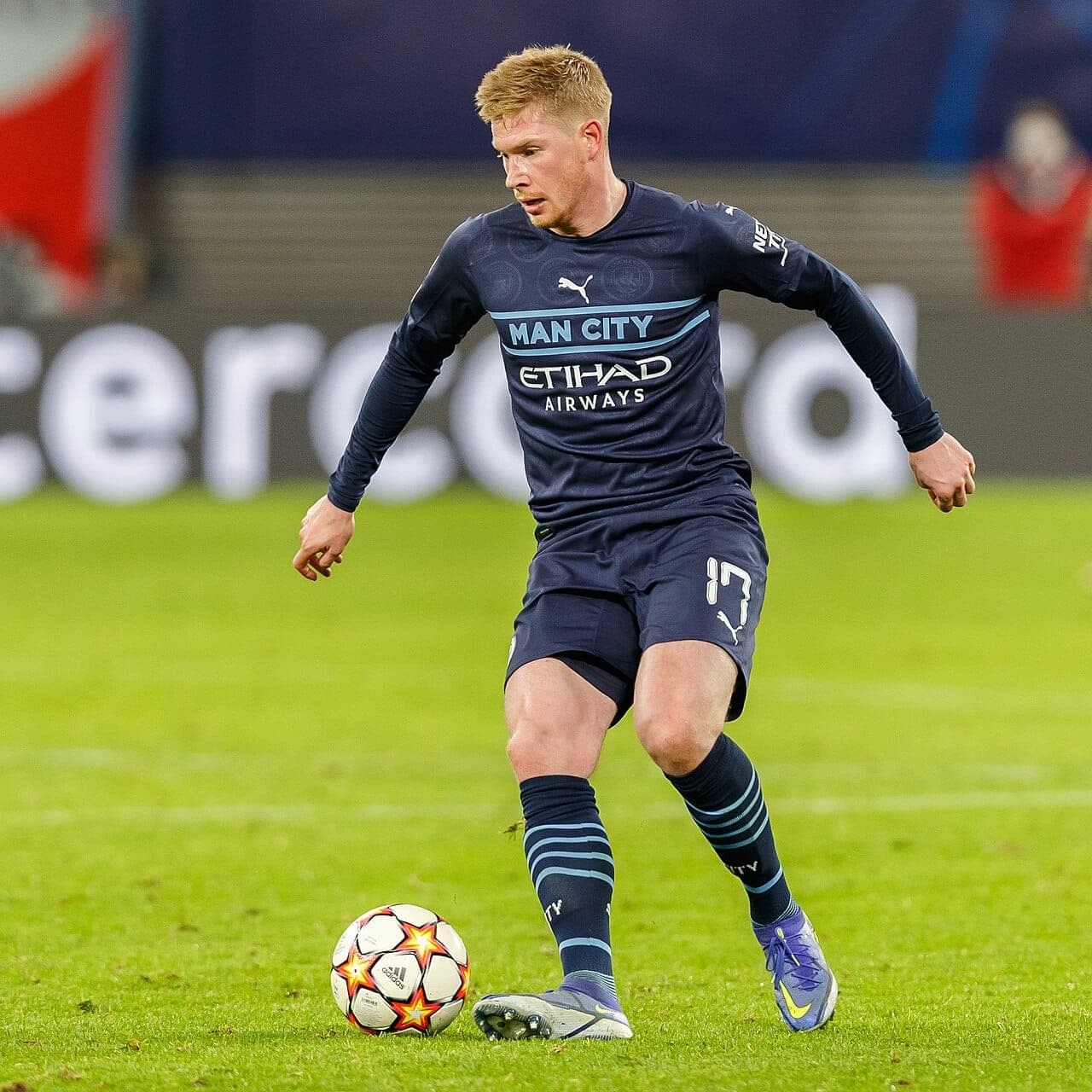
The Belgium that Rudi Garcia brings to this World Cup is built on the same accommodation. De Bruyne no longer covers the box-to-box territory that made him, alongside peak modern midfielders, the Premier League's best player of his generation — twice PFA Player of the Year, a Champions League winner in 2023, the assist king of an entire era. What remains is the part age touches last: the vision, the weight of pass, the ability to see the third move ahead. Belgium's attack, such as it functions, functions through his half-second decisions.
The generation's last accounting
The "golden generation" arc bends toward this month. Belgium topped FIFA's world rankings for years, reached the 2018 semi-final — the best World Cup finish in the country's history — and then aged publicly: the 2022 group-stage exit amid open dressing-room discord, the transitional Euro of 2024, the slow subtraction of Eden Hazard, Thibaut Courtois's era of dominance, Vincent Kompany to management. De Bruyne and Lukaku are the last load-bearing pillars still on the pitch, and both have spent this tournament alternating between reminders of 2018 and reminders of the calendar.
That duality is the honest scouting report. When Belgium's veterans get the game on their terms — a set defense to pick apart, a transition to conduct — they remain capable of the 5-1 and of the extra-time comeback. When opponents run at them for ninety minutes, the seams show. Seattle will test exactly that seam, because running for ninety minutes is the one thing this American team unfailingly does.
The USA, and the shape of the tie
The co-hosts arrive having won Group D comfortably — including a 4-1 opening statement against Paraguay — before beating Bosnia and Herzegovina 2-0 in the round of 32, Folarin Balogun scoring again on the stroke of half-time. Mauricio Pochettino's side presses in waves, attacks with the directness of its Balogun-Pulisic axis, and will have sixty-odd thousand in Lumen Field performing the twelfth-man role with intent. The American plan against a 35-year-old conductor writes itself: deny him the standing start, make every reception contested, and turn the game into track meet.
Belgium's counter-plan also writes itself, because it has worked twice this summer: survive the storm, slow the tempo to a walk, and let the best passer of his era find Lukaku's chest and Trossard's runs in the spaces a pressing team must eventually concede. The 2014 version of this fixture went to extra time before De Bruyne broke it open. Nobody in either camp would be surprised by a repeat structure.
The last of him
Whatever happens in Seattle, this is the closing chapter of one of the great midfield careers — a player who arrived via rejection (sold by Chelsea before he'd begun), built his legend in Manchester, and departs as the model for every deep playmaker of the 2020s. De Bruyne has never announced retirement dates, but 35-year-old hamstrings announce themselves, and Belgium's rebuild will not wait for 2030. One more win buys him a quarter-final. One more loss, and the golden generation's final entry reads: eliminated by the hosts, twelve years after eliminating them. Football's sense of symmetry is rarely this tidy. Sources: FIFA's official match records; career background via Manchester City, the Premier League and BBC Sport.