Rodri at the 2026 World Cup: Anatomy of the Pivot Behind Spain's Four Clean Sheets
Spain have played four matches at the 2026 World Cup without conceding a goal. A tactical look at how their captain — back from an ACL tear that cost him most of a season — makes the champions' machine run.
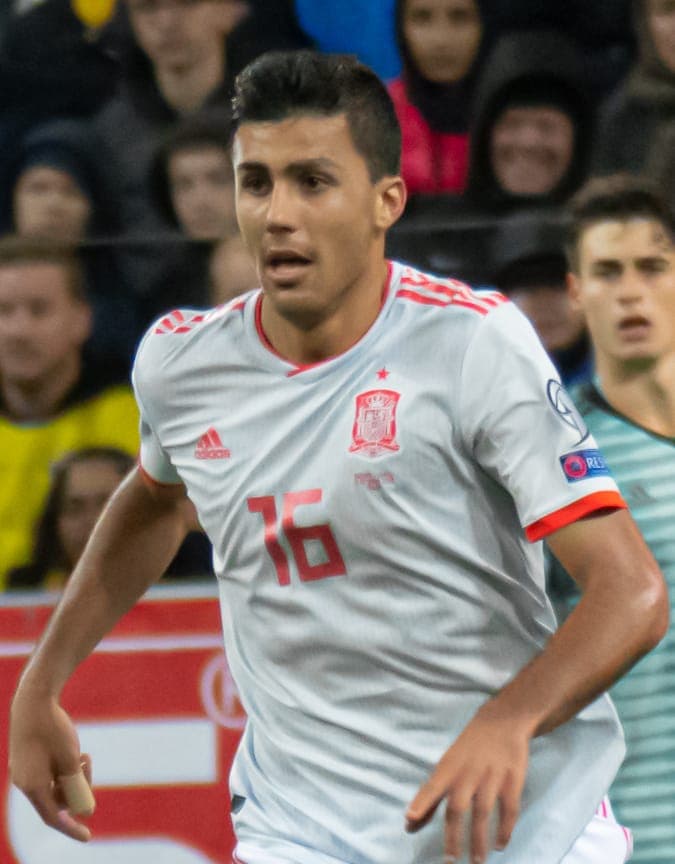
Spain have played four matches at the 2026 World Cup and have not conceded a goal. That statistic belongs to the whole team — Unai Simón, a well-drilled back four, a squad that presses in coordinated waves — but it starts with the man wearing the armband. Rodri, the 2024 Ballon d'Or winner, has captained La Roja through a group stage won with seven points and into the round of 16, eighteen months after a torn ACL threatened to reshape the back end of his career.
The job Spain ask him to do
Rodri's function under Luis de la Fuente is the same one he performs for Manchester City, and the same one that won him the Player of the Tournament award at Euro 2024: he is the single fixed point in a fluid system. Positioned at the base of midfield, he offers the first pass out of defence, screens the space in front of the centre-backs, and — crucially for a side built on possession — kills opposition counters before they become chances.
The value is easiest to see in what does not happen. Across the group stage — a 0-0 draw with Cape Verde, a 4-0 dismantling of Saudi Arabia and a 1-0 win over Uruguay, all verified in FIFA's Group H records — Spain conceded nothing. Even the frustrating opener in Atlanta, when a massed Cape Verde defence held out, produced almost no traffic the other way. Rodri said as much afterwards, telling reporters (per Goal): "The positive thing is that they barely created anything against us. We need to improve our finishing." His blunter assessment of the opposition's approach — "That's how they play. They don't get past midfield" — doubled as a description of his own effectiveness.
The comeback that made this possible
That Rodri is here at all, playing 90-minute knockout matches, was not guaranteed. He ruptured the ACL in his right knee against Arsenal in September 2024, weeks before collecting the Ballon d'Or on crutches, and the recovery consumed most of City's 2024-25 season — a layoff Goal put at more than 50 matches. He returned in May 2025 against Bournemouth, but the road back was not smooth: as Sky Sports and Yahoo Sports reported, a fitness setback at the summer 2025 Club World Cup delayed the start of his 2025-26 campaign, and Pep Guardiola later admitted the midfielder had rushed his comeback — while predicting he would be back to his best by this World Cup.
On the evidence of four matches, that forecast has aged well. Against Austria in the round of 32 at SoFi Stadium — a 3-0 win sealed by two Mikel Oyarzabal goals and a Pedro Porro header, per CBS Sports — Rodri wore the armband and played the full 90 as Spain controlled the game from start to finish.
Why the system leans on him
De la Fuente's Spain are not the sterile possession side of caricature. The 4-0 against Saudi Arabia showed the attacking variety — Lamine Yamal opening the scoring inside ten minutes, Oyarzabal striking twice in four minutes — and the 1-0 over Uruguay in Zapopan showed the grinding version, Álex Baena's 42nd-minute goal arriving via what Yahoo Sports described as a Fernando Muslera blunder. What links both faces of the team is the platform underneath: with Rodri holding, Pedri is free to carry and combine higher up, the full-backs can commit forward, and Yamal can stay wide and high without leaving the team exposed.
Spain's squad does carry cover — Martín Zubimendi, now of Arsenal, is the natural alternative at the base — but there is no like-for-like replacement for a player who pairs elite ball security with the reading of the game to defend enormous spaces alone. That scarcity is precisely why his injury year felt so threatening, and why his current durability matters more to Spain than any single attacker's form.
The Portugal test
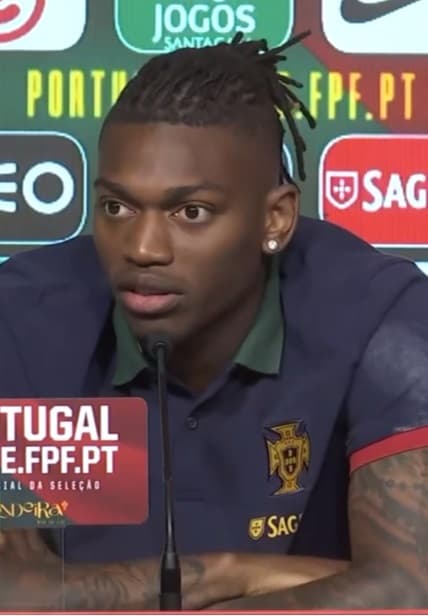
The round of 16 brings the sternest examination yet. Portugal beat Croatia 2-1 on July 2, Cristiano Ronaldo equalising from the penalty spot before Gonçalo Ramos headed a stoppage-time winner from Rafael Leão's cross, per ESPN. That is a forward line with pace on both flanks and a penalty-box predator — exactly the profile designed to punish a slow pivot.
If Rodri's knee and rhythm are truly back, this is where it shows. Transition defence against Leão's counters, tempo control against a midfield that will press in bursts, and the calm to play through pressure in front of a huge crowd: it is the full syllabus of his position. Spain have not needed to chase a game at this tournament. Should that change against Portugal, the champions' response will run — as it has all summer — through their captain.
Four matches, zero goals conceded, one armband. The Ballon d'Or was awarded for what Rodri does with the ball. This World Cup, so far, has been a monument to what he prevents without it.